The Slot Machine Myth: What Science Actually Says About Rewarding Your Dog
Some very common advice for maintaining trained behaviors may actually be working against you.

You’ve probably heard it before: once your dog has learned a behavior, stop rewarding it every time. Reward occasionally instead — like a slot machine. Keep them guessing, and they’ll keep working for it.
It sounds logical. It’s everywhere. And it may actually be undermining your training.
So what does the science actually say about how to build and maintain behaviors? And why does the slot machine analogy fall apart under scrutiny? Let’s dig in.
Where the Slot Machine Analogy Breaks Down
You won’t catch me at a slot machine — or gambling at all, even with pretend money at a prom after-party. The whole thing feels like the opposite of fun to me (does this make me a bore?).
But when trainers invoke the slot machine to explain why you shouldn’t reinforce every correct instance of behavior once it’s learned, they’re drawing on a familiar image: the person who keeps pulling that slot machine lever for hours, convinced the next one will pay out.
Because at some point, it will. My understanding is that, legally, it has to.
The problem is, that image — and the story behind it — probably isn’t the best foundation for how we train our dogs. It’s missing a great deal of nuance.
A Quick Primer on Reinforcement Schedules
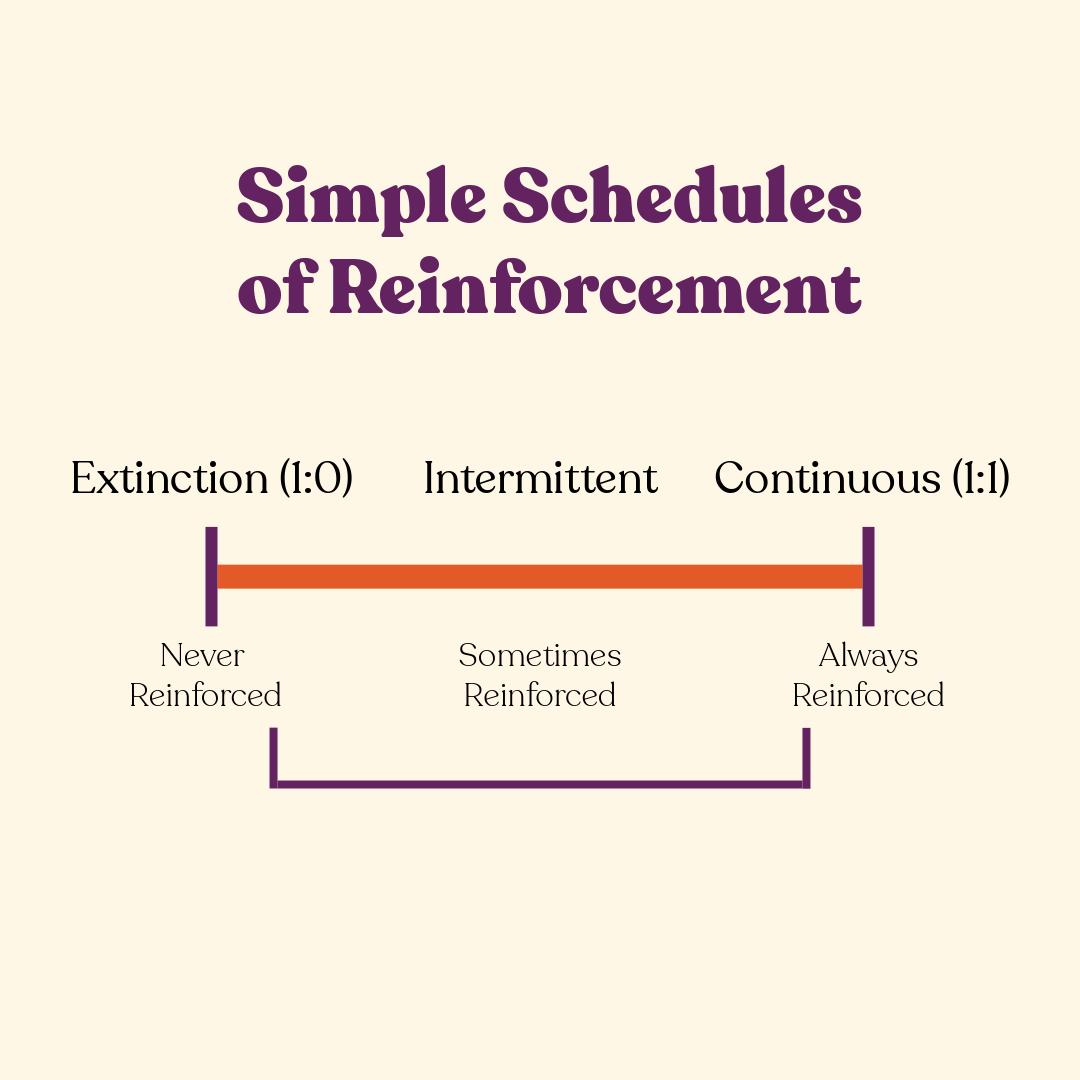
When somebody tells you to reward your dog like a slot machine (i.e. reward sometimes rather than every time), they are referring to a specific schedule of reinforcement.